
Your Complete Guide to Fire Door Drop Testing and NFPA 80 Compliance | Cornell Iron
For facility managers and building owners, the list of daily responsibilities is endless—from property operations to ensuring code compliance. But what is the one area where an oversight isn't just a costly mistake, but a potential catastrophe? Fire and life safety.
While it's easy to get lost in the complexities of building maintenance, ensuring that your facility's fire systems are fully operational is the most important responsibility of all. This is especially true for rolling fire doors, which are your first line of defense in containing a fire. That's why understanding the requirements for fire door drop testing isn't just about 'checking a box'—it's about protecting lives and property.
Key Takeaways
Short on time? Here are the highlights on fire door drop testing and NFPA 80 compliance:
- • Annual Drop Testing is Mandatory. The NFPA 80 standard mandates that your rolling fire doors are professionally inspected and tested at least once a year to ensure they are functional and compliant.
- • Only a Trained Technician is Qualified to Perform the Test. You are required to hire a technician with documented training from a manufacturer like Cornell or a recognized industry organization. General maintenance staff cannot perform this test.
- • Documentation is Your Proof of Compliance. Keeping organized records is mandatory. The initial acceptance test report must be kept for the life of the door, and annual inspection records must be kept for at least three years.
An Alarming Rise in Commercial Building Fires
The latest analysis from the U.S. Fire Administration (USFA), based on data from 2014 to 2023, reveals an alarming upward trend in the dangers associated with commercial fires. As the USFA prepares to sunset its legacy NFIRS reporting system in February 2026 for a more modern platform, these decade-long findings are a critical benchmark. The data shows:
- 19% increase in the number of fires.
- 70% increase in casualties.
- 10% increase in dollar losses for businesses.
- Over $3 billion in annual property damage.
The leading cause of commercial fires is cooking, followed by arson and issues with heating equipment. In terms of location, warehouses are at the highest risk, with over 1,000 fires reported annually. Other high-risk properties include healthcare facilities and buildings under construction.
This threat is especially dire for small businesses. A 2024 poll revealed a sobering reality: 27%
of small businesses are just one disaster away from closing their doors. While many owners believe they are prepared, most lack an emergency response plan for an unexpected fire.
These statistics are a clear warning. Proactive fire protection is a fundamental investment in your business's survival. While you can't eliminate every risk, you can control your preparedness. Ensuring your facility's smoke and fire systems are tested, compliant,
and fully functional is the first and most critical step.
Are There Hidden Gaps in Your Building's Fire Defense?
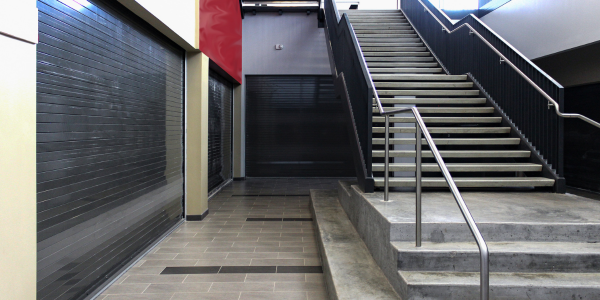
Your building's most fundamental protection comes from its "passive" defense system. This includes every fire-rated door, wall, and smoke curtain designed to do one thing: compartmentalize your building to mitigate smoke and fire from spreading.
Many building owners inherit compromised systems from day one. Modern design trends can create vulnerabilities:
- When Aesthetics Clash with Safety: Open-plan designs sometimes treat fire doors as an inconvenience, leading to poor egress planning where escape routes lack proper fire-rated protection.
- The Illusion of Openness: In atriums or large lobbies where walls aren't feasible, there is often nothing to stop toxic smoke and fumes from filling the space. This is a problem solved by automatic smoke and fire curtains, which deploy invisibly when needed.
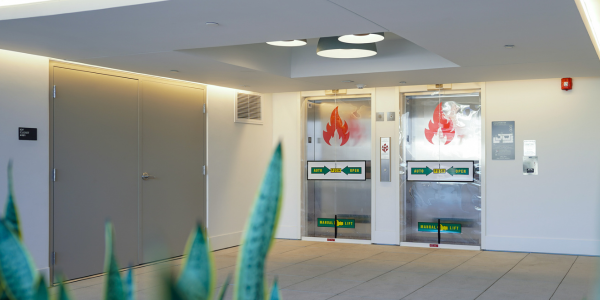
- Unprotected Elevator Shafts: Elevator hoistways act like chimneys during a fire, channeling smoke and toxic gases to upper floors. Elevator smoke curtains are specifically designed to automatically seal these vertical openings, preventing this rapid spread.
- Outdated for Today's Needs: The building you manage today may have a different purpose than when it was built. A lack of planning for future risks means its original fire protection design may no longer be sufficient for its current uses.
Why Fire Doors and Annual Drop Testing are Non-Negotiable
Fire-rated doors and smoke mitigation systems are essential for protecting your people and property. Their main purpose is to compartmentalize your building during a fire, which achieves two goals:
- It contains the threat by mitigating the spread of dangerous smoke and flames.
- It creates a window of time for occupants to evacuate and for first responders to arrive and control the situation.
However, a fire door is only effective if it operates correctly in an emergency. That's why annual fire door drop testing is one of your highest inspection priorities. If a periodic inspection and drop test is performed incorrectly or if the door isn’t
reset properly, it can lead to serious risks.
What Is A Fire Door Drop Test?
A periodic inspection is a mandatory annual periodic inspection required by NFPA 80 for passive fire protection systems.
The drop test is a specific periodic inspection test for automatic-closing fire doors, which includes all rolling fire doors (service/counter doors), smoke and fire curtains, and swinging fire doors.
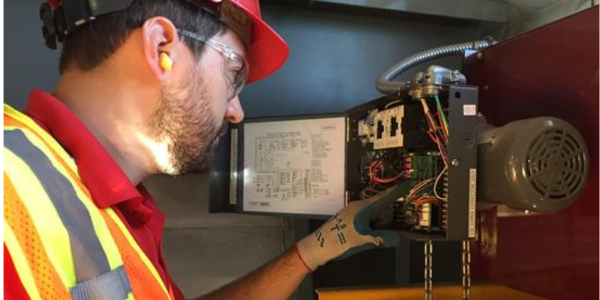
Current 2025 NFPA 80 guidelines require that drop tests be performed by a trained rolling steel fire door technician. Your technician will inspect and test your doors to verify proper operation, identify potential hazards, and maintain records of compliance and the door's operational status.
The Fire Door Drop Test Step-by-Step
A certified technician follows a precise, multi-step process to ensure your fire door is compliant and functional. Here’s what the inspection entails:
| Step | Action and Purpose |
| Visual Inspection | The technician thoroughly inspects all door components for any visible damage, wear, or obstructions that could impede its function. |
| Automatic Release | The door is released from its fully open position to verify that it begins to close automatically, as designed. |
| Controlled Descent | The closing speed is measured to confirm it meets the mandated range of 6 to 24 inches per second—not too fast to be a hazard, not too slow to be ineffective. |
| Complete Closure | The technician ensures the door closes fully and rests securely on the floor or sill, creating a complete seal without any manual assistance. |
| System Reset | Finally, the door is reset to its normal operational position. The test is often performed twice to confirm that the automatic closing system resets correctly every time. |
Understanding Your Test Results
Upon completion, the technician will provide formal documentation.
✔ A Pass
Results in the necessary compliance records for your facility.
✘ A Fail
Requires immediate action. The technician will specify whether repairs are sufficient or if the door needs to be replaced entirely. The door must pass a retest after the repairs are made.
Understanding the NFPA 80 Standard for Fire Doors
The definitive guide for the installation and maintenance of fire door assemblies is the NFPA 80, "Standard for Fire Doors and Other Opening Protectives." This document regulates the installation and maintenance of fire doors, and Chapter 5 specifically outlines the requirements for inspection, testing, and maintenance.
Important Testing and Record-Keeping Requirements
According to the NFPA 80 standard, all fire doors are subject to two primary testing schedules:
Acceptance Testing: This test must be performed by a qualified technician immediately after a fire door is installed. The documented results must be kept on file for the entire life of the assembly.
Periodic Inspections (Annual): Following the initial installation, all fire doors must be inspected and drop tested at least annually. The records for these annual tests must be kept for a minimum of three years.
How to Find a Cornell Certified Technician
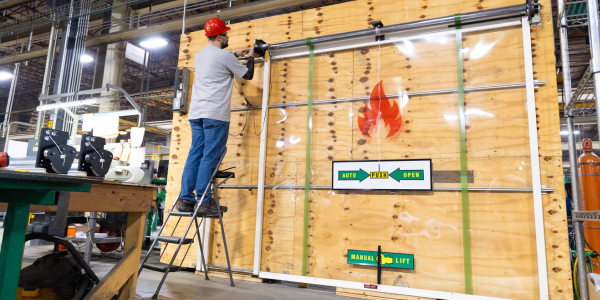
Fire door inspectors must hold certifications from recognized organizations like DHI (FDAI) and UL, or be NFPA-trained. Our expert network of Cornell Door Dealers are NFPA 80 certified and trained to conduct fire door drop tests and inspections.
Technicians will provide visual inspections, operational checks, adjustments, and provide the necessary reports and documentation to ensure your fire and smoke – rated doors and curtains function properly and fully align with current codes.
Find a Cornell Certified Technician Near You»
Frequently Asked Questions
How often do fire doors need to be drop tested?
According to the NFPA 80 standard, all rolling steel fire doors must be inspected and tested at least once a year. This annual test is mandatory to ensure the door remains compliant and functional.
What is the NFPA 80 standard for fire doors?
NFPA 80 is the official "Standard for Fire Doors and Other Opening Protectives." It is the primary code that regulates the installation, inspection, testing, and maintenance of fire doors to ensure they function correctly in an emergency.
Who is qualified to perform a fire door drop test?
As of the 2022 update to NFPA 80, fire door drop tests must be performed by a "trained rolling steel fire door systems technician." This means the individual must have documented training from a recognized industry organization or manufacturer, like Cornell. Your general maintenance staff cannot perform this test unless they hold this qualification.
What happens if a fire door fails the inspection?
If a door fails the drop test, the certified technician will provide a report detailing why it failed. They will specify whether the door requires repairs or if it needs to be replaced entirely. After any repairs are made, the door must pass a retest before it can be considered compliant.
Do I need to keep a record of the drop test?
Yes. Record-keeping is a mandatory part of NFPA 80 compliance.
- The initial Acceptance Test record must be kept for the life of the door assembly.
- Records of all Annual (Periodic) Inspections must be kept for a minimum of three years.
