Defender Series and Maximum Protection Rolling Doors
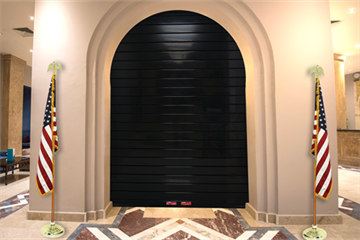
In severe conditions, you need a door that provides serious protection. Our Max Protection Doors provide extra security from natural or man-made threats.
The Cornell Line of Weather-Rated Doors
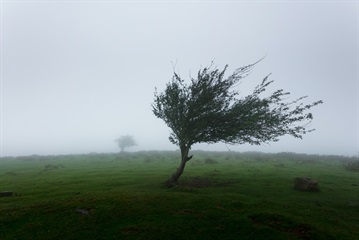
Cornell maximum protection doors stand up to extreme forces, offering superior resistance to extreme wind loads. We manufacture custom closures offering protection against winds from the most severe storms, including tornadoes and hurricanes, and a level of security unmatched by traditional rolling doors.
While there's no such thing as a fully hurricane-proof roll-up garage door, Cornell offers many options that weather Mother Nature. Prepare for the next hurricane, tornado, or wind storm for locations like:
- Administrative buildings
- Safe rooms and shelters
- Schools and public buildings
- Secure and sensitive structures
- Anywhere you want advanced protection
What Is a Hurricane-Rated Roll-Up Door?
A hurricane-rated door can withstand high amounts of impact. Due to their size, basic garage doors are vulnerable to storm winds and other driving forces. Manufacturers like Cornell solve this issue with reinforcements designed to resist those impacts.
Roll-up doors provide convenient operation, require low maintenance, and can offer insulation and sound-deadening qualities for extra benefits.
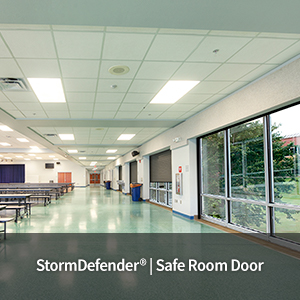
StormDefender® Doors
When the winds pick up, seal any opening with Cornell StormDefender security and storm doors, shutter-style closures designed to remain invisible until activated. With these doors, you can create a safe room anywhere, such as a cafeteria, gymnasium or any area offering enough room and protection for everyone. All our StormDefender doors are ICC 500/FEMA 361 rated for dependability in the event of a hurricane or tornado, with fire-rated models available.
What Is a Wind-Rated Rolling Door?
Wind-rated rolling doors are those capable of handling the high winds associated with extreme weather events like hurricanes and tornadoes. These storm types can present positive and negative pressures, requiring a garage door that can withstand both. Generally speaking, the industry measures wind resistance in pounds per square foot (PSF).
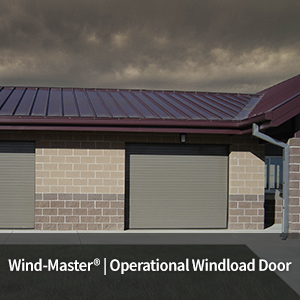
Wind-Master® Doors
Cornell Wind-Master rolling service doors operate under wind loads up to 20PSF — over 85 mph — for reliable performance under intense weather conditions. These doors are suited for virtually any commercial or industrial application, with insulated models available to reduce sound transfer and improve climate control.
Advanced Security and Protection Doors From Cornell
Storms aren't the only challenge businesses face today. Government structures, retail storefronts, and companies dealing with sensitive goods or data remain at risk from bad actors. Stop the most determined criminals in their tracks with our high-security protection doors.
What Is a High-Security Protection Door?
A high-security door provides unmatched defense for sensitive structures like government buildings, dispensaries, and more. Innovative design features make doors harder to penetrate, deterring theft and protecting people and assets from harm.
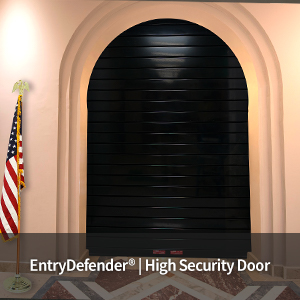
EntryDefender® Doors
The EntryDefender security door provides the highest level of safety during storms or sustained mob-style assault. Our award-winning design is the only model in the U.S. meeting Department of State regulations for forced entry protection, offering up to 60 minutes of sustained defense. EntryDefender doors also feature unparalleled wind resistance, rated to withstand sustained winds up to 125 PSF, or in excess of 200 mph.
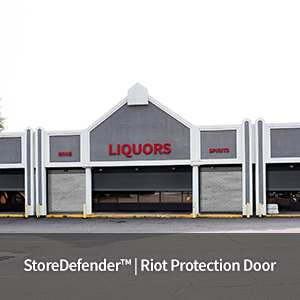
StoreDefender™ Doors
As the newest member of our Defender-series doors, the StoreDefender is an affordable, high-security solution for business owners. These doors give storefronts riot-level protection for confidence during times of unrest. StoreDefender includes heavy-duty 18-gauge construction with tamper-resistant fasteners and a 6-inch bottom bar.
"We are very pleased with the performance of the Cornell doors. Throughout the area, doors are blown out everywhere and the building we just moved from was destroyed. Here, our $2.3 million of inventory was saved. Being satisfied with the Cornell doors is an understatement!"
ROGER WEIR, OPERATIONS MANAGER AT LEWIS BEAR COMPANY
The Benefits of Hurricane Rated Storm and Security Doors
Installing Cornell max-protection doors in your facility guards your investment, and gives everyone inside your business the peace of mind that comes with knowing they're protected. Our rolling doors offer benefits like:
- Peace of mind: Our doors provide maximum protection for people and assets. You'll have confidence that you're safeguarding your team, inventories, and data.
- Durability: Cornell manufactures our commercial storm shutters from heavy-duty metals. We also use an interlocking design for high performance and low maintenance needs.
- Custom sizing: We craft our doors to your dimensions for a perfect fit.
Additional Options and Accessories
Cornell is your source for creating the closure system you need in the style you want — with all the parts necessary to keep your doors working their best. Depending on your selection, your roll-up shutter or door may be available in different base materials. StormDefender and EntryDefender doors are made using 12 gauge, 4-inch shutters, while you can order Wind-Master doors made from steel or stainless steel.
Improve your configuration with options to upgrade our base models. Add features like battery backups, motorized operators, and annunciators. Plus, you can transform your door's look with SpectraShield™ powder-coating or AtmoShield® texturized color finishes.
Safeguard Your Investments With Cornell Roll-Up Doors
Our weather-rated roll-up doors provide the protection you need for people and business assets. Create your ideal solution today on our Architect Portal or get design help from a professional. Call us at 800-233-8366, submit a request online, or visit your certified Cornell dealer for more information.
.tmb-prod-md.jpg?sfvrsn=57a4086d_1 "wind-master-operable-wind-image-(1)")